 MYLS AI
Oxford Computer Science
Practice Oxford Computer Science video interviews with AI feedback on logical reasoning, algorithmic thinking, and think-aloud communication so you can handle theory-heavy tutorial-style problems more effectively.
Essai gratuit d’une question · Sans carte
- Questions par séance
- 4
- Durée d'une séance
- 13 min
- Format de réponse
- Vidéo
Ce que votre rapport évalue
Chaque réponse est évaluée sur ces points, puis vous voyez ceux qui ont fait baisser le score.
Verbal/Speaking Feedback
- Enthusiasm and Confidence
- Timing
- Clarity of Speaking
- Pitch and consistency
- Speed of Talking
Content Feedback
- Clarity of Content
- Conciseness
- Logical Presentation
- Use of examples
- Vocabulary
Answer Feedback
- Relevancy
- Critical Thinking
- Insightfulness
Expression
- Smile
- Eye Contact
- Confidence
- Background
- Face Positioning
Compétences évaluées
- Motivation for Computer Science
- Oxford Course Fit
- Logical Reasoning
- Knowledge Transfer
- Algorithmic Thinking
- Mathematical Problem Solving
- Recursive Reasoning
- Abstract Reasoning
- Think-Aloud Communication
- Responsive Problem Solving
- Intellectual Curiosity
- Academic Fit for Theoretical Computer Science
- Tutorial Readiness
- Whiteboard Reasoning
Questions de la banque
Quelques vraies questions pour vous entraîner dès maintenant.
You are locked in a room with your worst enemy. On a table is a bar of chocolate, divided into squares in the usual way. One square is painted with bright green paint containing a deadly poison. You and your enemy take turns to break off one or more squares from the remaining chocolate along a straight line and eat them. Whoever is left with the green square must eat it and die. You may look at the bar of chocolate and decide whether to go first or second. Describe your strategy.
02A group of 7 pirates has 100 gold coins. The most senior pirate proposes a division. All pirates vote, including the proposer. If 50% or more accept, the proposal passes; otherwise, the proposer is thrown overboard and the process repeats. Pirates are perfectly rational and want to stay alive, get maximum gold, and throw others overboard if possible. What division should the senior pirate propose?
03An urn contains 23 white beans and 34 black beans. A monkey takes out two beans. If they are the same, he puts a black bean into the urn. If they are different, he puts in a white bean from a large heap next to him. The monkey repeats this procedure until there is only one bean left. What colour is it?
04Tidy boxes. You are given 10 boxes, each large enough to contain exactly 10 wooden building blocks, and a total of 100 blocks in 10 different colours. There may not be the same number in each colour, so you may not be able to pack the blocks into the boxes in such a way that each box contains only one colour of block. Show that it is possible to do it so that each box contains at most two different colours.
05Searching for the maximum. The real-valued function f(x), defined for 0 <= x <= 1, has a single maximum at x = m. If 0 <= u < v <= m then f(u) < f(v), and if m <= u < v <= 1 then f(u) > f(v). You are told nothing else about f, but you may ask for the value of f(x) for any values of x you choose. How would you find the approximate value of m? How accurately could you find m if you could choose only 10 values of x for which to evaluate f(x)?
Comment ça marche
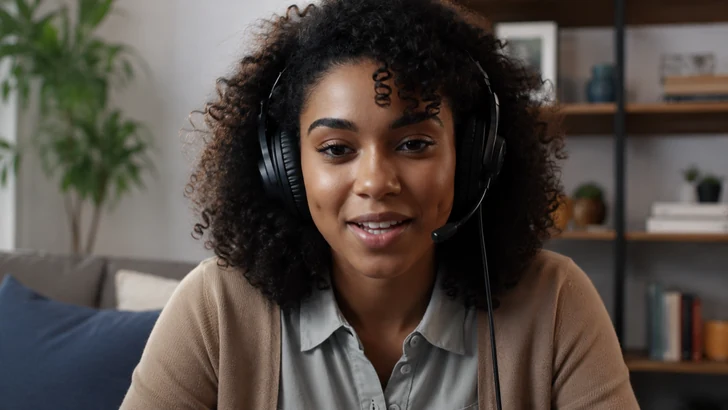
Ce que vous obtenez
The session
Realistic practice that builds confidence
- Timed question flowPractice with the same pacing and response format used by this program.
- Audio-ready questionsHear or read each question before responding, depending on the program setup.
- Focused topic coverageEach session pulls from the configured question bank.
- Transcript and recordingReview what you said and how you delivered it after every session.
The report
Per-question analysis tied to the scoring criteria
- Score predictionSee your overall readiness and criterion-level scores.
- Per-question feedbackUnderstand the exact issue in each response.
- Improvement suggestionsTurn weak spots into concrete next practice goals.
- Progress historyRepeat sessions and track your performance over time.
Pour qui
Build a steady admissions practice rhythm
- Turn school, activity, and personal stories into clear answers
- Keep your examples fresh before interviews begin
- Improve one communication skill at a time
Understand your current interview readiness
- See how clearly you explain your interests and fit
- Learn what strong undergraduate interview answers need
- Find the skills to prioritize first
Sharpen before your admissions interview
- Organize your best examples quickly
- Reduce nervous pauses under timed conditions
- Build confidence before interview day
Questions
Toutes les questionsWhat does this program evaluate?
This program evaluates answer quality, communication, fit, and the skills needed for this opportunity.
How should I use the sample questions?
Use them to understand the expected style, then start a real session to receive scored feedback.
Can I repeat the program?
Yes. Repeated sessions help you build consistency and compare feedback over time.
What do I get after a session?
You receive a structured report with scores, strengths, gaps, and suggestions for the next attempt.
Les scores et retours servent à s'entraîner. Ils ne prédisent ni ne garantissent une admission, un résultat d'examen ou une offre d'emploi.